
Showing posts with label early language development. Show all posts
Showing posts with label early language development. Show all posts
Wednesday, 28 December 2016
Helping your child's language development over the holidays
For some kids, being home for the holidays is a much needed break - but for others, it can be difficult or worrisome for them to spend time away from an environment in which their speech and language receives extra monitoring and support. Even without elaborate craft times or day trips around town, there are easy ways for you as parents to help your child's language development every day at home.

Wednesday, 21 September 2016
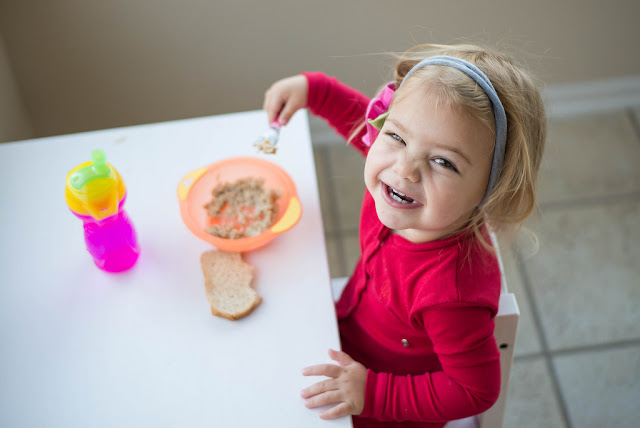
Is repeating baby talk bad for speech development?
"Your toddler's baby talk is cute, but are you stunting her development by repeating it back?" (Moyer, 2016)
Listening to those little mistakes that are oh-so-cute, we can sometimes find ourselves saying the same mistakes when responding - or maybe even in our own language to encourage the errors simply for their sweetness. But when is it a disservice to model these errors in our language?
Dianne Paul, director of clinical issues in speech-language pathology at the American Speech-Language-Hearing Association, says it is not bad for parents to mimic the mistake's of toddlers as long as they don't do it all the time.
Saturday, 17 September 2016
Fact or Fiction? The Top 10 Assumptions about Early Speech and Language Development
It's so easy to get so wrapped up in studies and articles, research and stories, that it gets hard to sort out fact from fiction. The Hanen Centre is always a great resource of information, and they are great at keeping things SIMPLE. Check out this Fact or Fiction? The 10 Assumptions about Early Speech and Language Development and see for yourself.

Tuesday, 16 August 2016
Combining words - it's a big deal!
First words are exciting! But what receives less than its share of attention is a child's ability to combine words together. A recent study found that children who were late to combine words were more likely to have future problems with language, than those who were late to use first words (Lowry, 2016). The Hanen Centre answers commonly asked questions such as "Are 'thank you' and 'goodnight' two word combinations?" and "How can I learn to help my child combine words together?".
Find all the answers HERE.

Thursday, 21 April 2016
What's that again?
Plenty of research has shown that the amount of language children hear in the first years of life is undeniably important to their own verbal abilities later, and some are now focussing on the quality of that language. Using short repeated utterances has been found to play a role in language development and identification skills. Check out the details of this research HERE!

Saturday, 2 April 2016
Bedtime Stories for Young Brains
Reading a bedtime story can be a signal in routine that the time to sleep is nearing. It can be a chance to escape to a make-believe world, or just a calming wrap-up to a busy day. But according to studies, reading bedtime stories - really, any stories at any time of day, can be so much more. Children who are frequently read to, and with, from a young age have more experience attaching images to words and stories they hear. It can help them understand, and later support the transition to books without pictures. This simple act of reading together is not just an enjoyable time together - it can truly impact your child's learning, language development, and even future school success.

Tuesday, 22 March 2016
What Makes Your Child "Tick"?
Including a child's interests in every day activities leads to better communication and language outcomes. It motivates them to interact - and for longer, and gives parents more opportunities to promote communication. Discovering your child's interests can be made easy using 3 important components. Physically get on their level, be face-to-face, and wait. Waiting provides the opportunity for you to see what your child is interested in and follow their lead, instead of initiating an activity of your choice. Using your child's interests in daily activities can provide ample opportunity for building communication skills. Find out more from The Hanen Centre HERE.

Thursday, 17 March 2016
Literacy-Building Ideas!
Early literacy skills are the tools children use when learning to read and write. Building these skills can be one of the most important ways to prepare your child for school. At a loss for where or how to start? Check out these fun tips for building the critical 5 early literacy skills - oral language, vocabulary, story comprehension, print knowledge, and sound awareness - with just 5 books!

Saturday, 5 March 2016
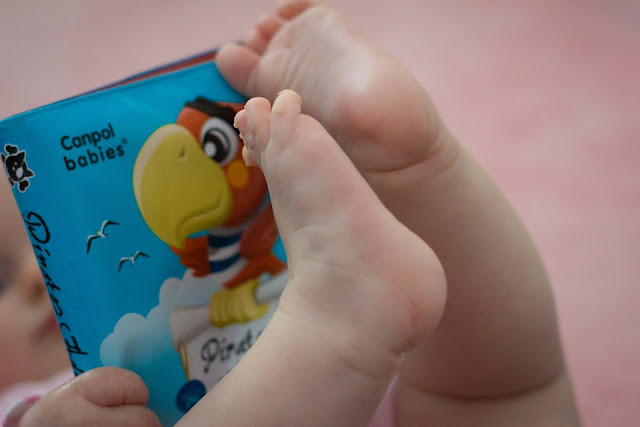
Responding To Baby Babbles During Book Reading May Be Key To Language Development
New research published by Language Learning and Development studied the interactions of mothers and their infants during various types of play. By considering and coding the babies' vocalizations and the mothers' responses, they concluded that responding to your baby's coos and babbles during book reading may be the key to language development. To find out more, check out the full story
Tuesday, 1 March 2016
Key Skills for Developing Communication in Children with Autism
Each child with autism is unique, and therefore, so is their development of communication skills. Despite so much variability in development and learning, research has found that children that have stronger abilities with a specific handful of skills - joint attention, imitation, and toy play - will have better communication skills as older children.
Find out how these integral skills are connected to communication, and how to help your child develop these skills.

Thursday, 28 January 2016
The Importance of Gestures
It can sometimes take an extra reminder to look past the focus on verbal language and remember the important role that gestures play in communication.
The Hanen Centre is a wonderful source with a wealth of information on many topics. Find out when to expect your child to use gestures, how to help them, and what to do if they are not using gestures.

Sunday, 3 January 2016
Baby Talk: From 'goo goo ga ga' to Theory of Mind
Baby Talk: Using Emotion-Based Language With Your Baby Will Help Them Develop Strong Social Skill Later In Life

"Baby talk is a great way to bond with your newborn, but recent research has shown just how important this behavior is in shaping your child’s future social skills as well. According to the study, mothers who used more emotion-based words when speaking to their babies had children who grew up with a better understanding of other people’s feelings." (Dovey, 2015).
Find out more about this research, its findings, and the implications of what it could mean to shift our idea of baby talk from 'goo goo ga ga' to a framework considering emotional language and theory of mind.
Check out the full article, HERE.
Wednesday, 16 December 2015
Technology and Your Child's Development
Digital distractions have become the new normal in our everyday lives.
Technology can make things easier, faster, more convenient -- but at what cost?
From parents of infants using their technology during time which could be spent interacting with their babies, to children who say their parents check their devices too often -- discover even more about how technology and our ever-increasing use of it is becoming a factor in the development
of our children.

Wednesday, 25 November 2015
How can you tell if your child has a speech or language impairment?
How can you tell if your child has a speech or language impairment? There is a lot of research available to help you answer that question. Keep reading to find out more..

https://theconversation.com/how-to-tell-if-your-child-has-a-speech-or-language-impairment-31768
Does your child have a speech disorder?
Does your child have a speech disorder? It's important to be aware of the early signs says Pascal Van Lieshout, U of T professor and chair of the Speech Language Pathology department.

http://www.thestar.com/life/health_wellness/2015/11/23/how-to-determine-if-your-child-has-a-speech-disorder.html
Saturday, 13 June 2015
Infants show preference for baby talk in Montreal research

CBC: Infants show preference for baby talk in Montreal research. An infant's brain maps language from birth.
Wednesday, 10 December 2014
An infant's brain maps language from birth
 |
| google image |
Too much screen time may harm children's language and literacy skills
 |
| google image |
Sunday, 5 October 2014
Building Language in Babies Well Before First Words are Spoken
 |
| google image |
In the first few months, babies begin to distinguish the sounds that make up language from all the other sounds they hear. Between 4 - 7 months, "babies can be trained to more effectively recognize which sounds "might" be language, accelerating the development of the brain maps which are critical to language acquisition and processing....Read the full article describing recent research at Rutgers University:
http://www.sciencedaily.com/releases/2014/09/140930171434.htm
Thursday, 2 October 2014
Communication Milestones Birth to 5 years

Birth to 3 months:
Does the
child:
• make cooing sounds
• have different cries for different needs
• smile at you
• startle to loud sounds
• soothe/calm to a familiar voice
4 to 6 months:
Does
the child:
• babble and make different sounds
• make sounds back when you talk
• enjoy games like peek-a-boo
• turn his/her eyes toward a sound source
• respond to music or toys that make noise
7 to 12 months:
Does
the child:
• wave hi/bye
• respond to his/her name
• let you know what he/she wants using sounds, and/or actions
like pointing
• begin to follow simple directions (e.g., Where is your nose?)
• localize correctly to sound by turning his/her head toward the
sound
• pay attention when spoken to
By 12 to 18 months:
Does
the child:
• use common words and start to put words together
• enjoy listening to storybooks
• point to body parts or pictures in a book when asked
• look at your face when talking to you
By 18 to 24 months:
Does
the child:
• understand
more words than he/she can say
• say
two words together (e.g., More juice)
• ask
simple questions (e.g., What’s that?)
• take
turns in a conversation
2 to 3 years:
Does
the child:
• use
sentences of three or more words most of the time
• understand
different concepts (e.g., in-on; up-down)
• follow
two-part directions (e.g., take the book and put it on the table)
• answer
simple questions (e.g., Where is the car?)
• participate
in short conversations
3 to 4 years:
Does
the child:
• tell
a short story or talk about daily activities
• talk
in sentences with adult-like grammar
• generally
speak clearly so people understand
• hear
you when you call from another room
• listen
to TV at the same volume as others
• answer
a variety of questions
4 to 5 years:
Does
the child:
• pronounce
most speech sounds correctly
• participate
in and understand conversations even in the presence of background noise
• recognize
familiar signs (e.g., stop sign)
• make
up rhymes
• hear
and understand most of what is said at home and school
• listen
to and retell a story and ask and answer questions about a story
Subscribe to:
Posts (Atom)