Showing posts with label research. Show all posts

Tuesday, 11 October 2016

Closing the gap: Teaching phonics skills alongside reading raises literacy achievement among Indigenous children

In New Zealand, a literacy program is being used to close the gap between the literacy skills of indigenous, disadvantaged children and their elementary school peers.
By teaching phonics alongside repetitive reading, where the words become recognizable to the students, they are being taught HOW to sound out words.  Their skills began to approach average levels, including reading accuracy, comprehension, and spelling (The Conversation, 2016).
To find out more about this approach and its benefits to these students, check out The Conversation. 


Saturday, 9 July 2016

Breakthrough study pinpoints genetic conditions behind intellectual disabilities

Researchers out of British Columbia have identified the genetic underpinning of certain intellectual disabilities in children (CTV News, 2016).  Being able to identify the underlying genetic conditions means target treatment can be offered in as many cases as possible.  In specific cases, the right intervention has decreased self-injurious behaviour, improved overall mood, and has even increased communication skills. 


Thursday, 21 April 2016

What's that again?

Plenty of research has shown that the amount of language children hear in the first years of life is undeniably important to their own verbal abilities later, and some are now focussing on the quality of that language.  Using short repeated utterances has been found to play a role in language development and identification skills. Check out the details of this research HERE! 


Saturday, 16 April 2016

Low levels of hormone linked to social deficit in autism

Stanford Medicine reports findings that children with autism present with low levels of a hormone that affects their ability to empathize with others.  Researchers have found a correlation between the low levels of this hormone - vasopressin - and the inability of autistic children to understand that the feelings and perspectives of others differ from their own.  Check out how these researchers investigated this hormone to find these correlations, and what the effects of this hormone may mean for future treatment. 


Tuesday, 5 April 2016

A newfound link between brain injuries and ADHD

Researchers in Toronto have found a link between brian injuries and ADHD - and it goes both ways.  Suffering from a Traumatic Brain Injury (TBI) has been found to make a person 2 1/2 times more likely to screen positive for ADHD, while having ADHD makes a person who has had a TBI will incur future traumatic brain injuries.  The increased chance brought on by the presence of ADHD is due to the individuals' impaired attention, making them less aware of danger for example.  The relation between these injuries to the brain and an attention disorder draws even more attention to the importance of the healing process following any kind of brain injury - including concussions. 


Maclean's - A newfound link between brain injuries and ADHD

Saturday, 2 April 2016

Bedtime Stories for Young Brains

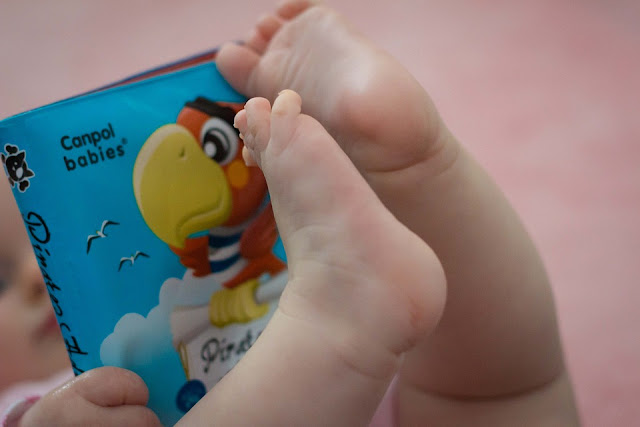
Reading a bedtime story can be a signal in routine that the time to sleep is nearing.  It can be a chance to escape to a make-believe world, or just a calming wrap-up to a busy day.  But according to studies, reading bedtime stories - really, any stories at any time of day, can be so much more.  Children who are frequently read to, and with, from a young age have more experience attaching images to words and stories they hear.  It can help them understand, and later support the transition to books without pictures.  This simple act of reading together is not just an enjoyable time together - it can truly impact your child's learning, language development, and even future school success.


Saturday, 26 March 2016

Why It's So Difficult to Diagnose Autism in Girls

More and more research about the presentation of autism in girls is continuing to surface, and it is a welcome development.  Diagnosing girls is more difficult because on top of the very diverse presentation of any individual with this disorder, it seems that most screening and diagnostic tools have been developed with the observations of boy's behaviours in mind.  Research has proposed that perhaps girls are better at camouflaging their symptoms, therefore, making an accurate diagnosis less likely or at the least, more difficult. Find out more about the fascinating investigation researchers are taking on to learn about autism in girls and how we can better diagnose and serve this population.  


Saturday, 5 March 2016

Responding To Baby Babbles During Book Reading May Be Key To Language Development

New research published by Language Learning and Development studied the interactions of mothers and their infants during various types of play.  By considering and coding the babies' vocalizations and the mothers' responses, they concluded that responding to your baby's coos and babbles during book reading may be the key to language development.  To find out more, check out the full story


Tuesday, 1 March 2016

Key Skills for Developing Communication in Children with Autism

Each child with autism is unique, and therefore, so is their development of communication skills. Despite so much variability in development and learning, research has found that children that have stronger abilities with a specific handful of skills - joint attention, imitation, and toy play - will have better communication skills as older children. 
Find out how these integral skills are connected to communication, and how to help your child develop these skills.


Sunday, 5 October 2014

Building Language in Babies Well Before First Words are Spoken


google image

In the first few months, babies begin to distinguish the sounds that make up language from all the other sounds they hear. Between 4 - 7 months, "babies can be trained to more effectively recognize which sounds "might" be language, accelerating the development of the brain maps which are critical to language acquisition and processing....Read the full article describing recent research at Rutgers University:
http://www.sciencedaily.com/releases/2014/09/140930171434.htm

Sunday, 28 September 2014

Scientists identify the gene for emergent language

Google Image
"A telltale stretch of DNA at a gene called ROBO2 is linked to the number of words that a child masters in the early stage of talking...  ROBO2 controls a protein that directs chemicals in brain cells that may be used for developing language and producing sounds.The gene lies on a region of Chromosome 3 which has previously been implicated in dyslexia and speech-related disorders, according to the study."   Read more: 
Scientists identify ROBO2, the 'baby talk' gene | Lifestyle from CTV News

Wednesday, 17 September 2014

Early autism intervention speeds infant development

google image - 6 month old infant

In this pilot project, parents of infants between 6 months and 15 months who were demonstrating symptoms of autism, were given strategies to facilitate engagement during play, diaper changing and bath time. Read on to learn about the promising findings:
Early autism intervention speeds infant development - health - 10 September 2014 - New Scientist