Critical thinking skills like problem solving, predicting, and projecting can grow with language, and can impact literacy too! As a child's thinking is encouraged to expand, their language framework expands along with it to support these new ideas and interpretations of the world. These same skills are called to action to understand the meaning of a book - reading between the lines, drawing on experiences, and making inferences enable them to understand things not explicitly written in the text. Learn the E's and P's to easily encourage the development of your child's critical thinking skills.
KidsTalk Wellington provides speech and language services to children in Wellington County. This blog contains resources for parents and professionals seeking resources, current research and best practices in the areas of speech, language and literacy development. www.kidstalkwell.com
Showing posts with label oral language. Show all posts
Tuesday, 29 March 2016
Wednesday, 25 November 2015
How can you tell if your child has a speech or language impairment?
How can you tell if your child has a speech or language impairment? There is a lot of research available to help you answer that question. Keep reading to find out more..
https://theconversation.com/how-to-tell-if-your-child-has-a-speech-or-language-impairment-31768
Does your child have a speech disorder?
Does your child have a speech disorder? It's important to be aware of the early signs says Pascal Van Lieshout, U of T professor and chair of the Speech Language Pathology department.
http://www.thestar.com/life/health_wellness/2015/11/23/how-to-determine-if-your-child-has-a-speech-disorder.html
Saturday, 16 May 2015
Monday, 23 March 2015
Closing the Word Gap
![]() |
| google image |
Wednesday, 10 December 2014
Too much screen time may harm children's language and literacy skills
![]() |
| google image |
Sunday, 16 November 2014
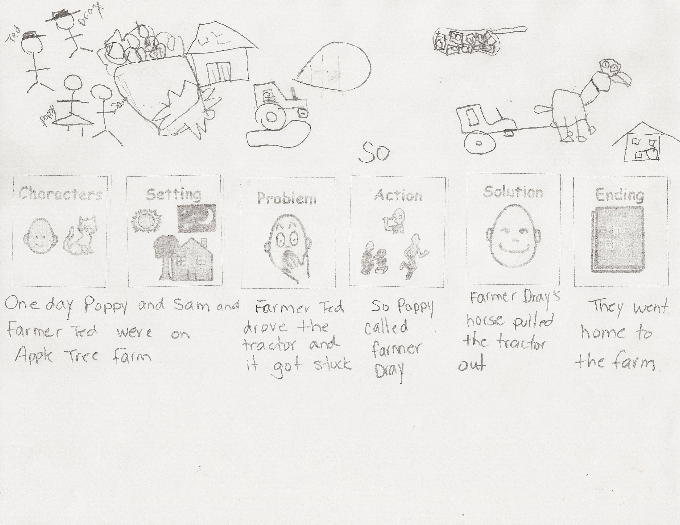
Stick writing: Drawing that supports oral and written language
Pictographs are simple stick drawings used to represent the chronology of events in a story or procedure. Children can use stick drawings as a means to support memory and organization for oral story telling or as a pre-writing task.
http://www.ecstresources.com/uploads/6/1/9/1/6191025/pictographydetails.pdf
Thursday, 2 October 2014
Communication Milestones Birth to 5 years
Birth to 3 months:
Does the
child:
• make cooing sounds
• have different cries for different needs
• smile at you
• startle to loud sounds
• soothe/calm to a familiar voice
4 to 6 months:
Does
the child:
• babble and make different sounds
• make sounds back when you talk
• enjoy games like peek-a-boo
• turn his/her eyes toward a sound source
• respond to music or toys that make noise
7 to 12 months:
Does
the child:
• wave hi/bye
• respond to his/her name
• let you know what he/she wants using sounds, and/or actions
like pointing
• begin to follow simple directions (e.g., Where is your nose?)
• localize correctly to sound by turning his/her head toward the
sound
• pay attention when spoken to
By 12 to 18 months:
Does
the child:
• use common words and start to put words together
• enjoy listening to storybooks
• point to body parts or pictures in a book when asked
• look at your face when talking to you
By 18 to 24 months:
Does
the child:
• understand
more words than he/she can say
• say
two words together (e.g., More juice)
• ask
simple questions (e.g., What’s that?)
• take
turns in a conversation
2 to 3 years:
Does
the child:
• use
sentences of three or more words most of the time
• understand
different concepts (e.g., in-on; up-down)
• follow
two-part directions (e.g., take the book and put it on the table)
• answer
simple questions (e.g., Where is the car?)
• participate
in short conversations
3 to 4 years:
Does
the child:
• tell
a short story or talk about daily activities
• talk
in sentences with adult-like grammar
• generally
speak clearly so people understand
• hear
you when you call from another room
• listen
to TV at the same volume as others
• answer
a variety of questions
4 to 5 years:
Does
the child:
• pronounce
most speech sounds correctly
• participate
in and understand conversations even in the presence of background noise
• recognize
familiar signs (e.g., stop sign)
• make
up rhymes
• hear
and understand most of what is said at home and school
• listen
to and retell a story and ask and answer questions about a story
Sunday, 28 September 2014
The Power of Imitation for Children with Autism
![]() |
| Hanen- Google image |
Read on about the power of imitation during play:
http://www.hanen.org/Helpful-Info/Articles/Follow-the-Leader--The-Power-of-Imitating-Children.aspx
Sunday, 14 September 2014
Red Flags for Autism
- No big smiles or other warm, joyful expressions by six months or thereafter
- No back and forth sharing of sounds, smiles or facial expressions by 9 months
- No babbling by 12 months
- No back and forth gestures such as pointing, showing, reaching or waving by 12 months
- No meaningful two-word phrases (including imitating or repeating) by 24 months
- Any loss of speech, babbling or social skills at any age
To read more about the signs and symptoms of autism click on the Link for Autism Speaks Canada:
http://www.autismspeaks.ca/about-autism/signs-and-symptoms-of-autism/
Sunday, 7 September 2014
Can Children with Language Impairments Learn Two Languages?
![]() |
| google image |
http://www.hanen.org/Helpful-Info/Articles/Can-children-with-language-impairments-learn-two-l.aspx
Friday, 29 August 2014
You are still reading aloud to your independent reader? Good!!
![]() |
| google images |
Vocabulary App: World's Worst Pet
The World's Worst Pet is an ipad app that targets vocabulary growth. This app is appropriate for students in grade 4-8 but may be used with younger children if supported by an adult. The vocabulary instruction is similar to educational methods promoted by Isobel Beck et al. in her book Bringing Words to Life: Robust Vocabulary Instruction. Best of all, kids love it!
Subscribe to:
Posts (Atom)


.jpeg)