Tuesday, 5 April 2016

A newfound link between brain injuries and ADHD

Researchers in Toronto have found a link between brian injuries and ADHD - and it goes both ways.  Suffering from a Traumatic Brain Injury (TBI) has been found to make a person 2 1/2 times more likely to screen positive for ADHD, while having ADHD makes a person who has had a TBI will incur future traumatic brain injuries.  The increased chance brought on by the presence of ADHD is due to the individuals' impaired attention, making them less aware of danger for example.  The relation between these injuries to the brain and an attention disorder draws even more attention to the importance of the healing process following any kind of brain injury - including concussions. 


Maclean's - A newfound link between brain injuries and ADHD

Saturday, 2 April 2016

Bedtime Stories for Young Brains

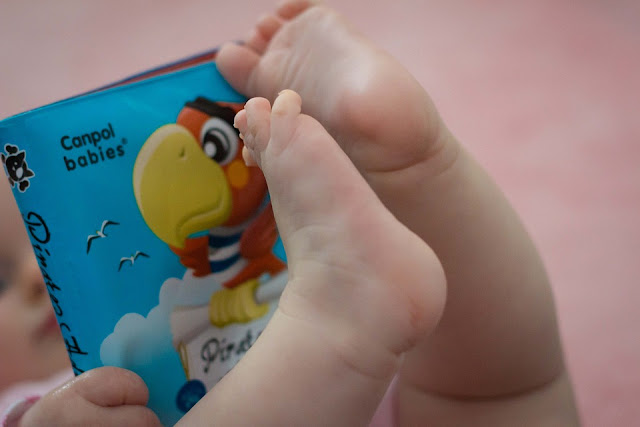
Reading a bedtime story can be a signal in routine that the time to sleep is nearing.  It can be a chance to escape to a make-believe world, or just a calming wrap-up to a busy day.  But according to studies, reading bedtime stories - really, any stories at any time of day, can be so much more.  Children who are frequently read to, and with, from a young age have more experience attaching images to words and stories they hear.  It can help them understand, and later support the transition to books without pictures.  This simple act of reading together is not just an enjoyable time together - it can truly impact your child's learning, language development, and even future school success.


Tuesday, 29 March 2016

The E's and P's to Build Critical Thinking

Critical thinking skills like problem solving, predicting, and projecting can grow with language, and can impact literacy too!  As a child's thinking is encouraged to expand, their language framework expands along with it to support these new ideas and interpretations of the world.  These same skills are called to action to understand the meaning of a book - reading between the lines, drawing on experiences, and making inferences enable them to understand things not explicitly written in the text.  Learn the E's and P's to easily encourage the development of your child's critical thinking skills.


Saturday, 26 March 2016

Why It's So Difficult to Diagnose Autism in Girls

More and more research about the presentation of autism in girls is continuing to surface, and it is a welcome development.  Diagnosing girls is more difficult because on top of the very diverse presentation of any individual with this disorder, it seems that most screening and diagnostic tools have been developed with the observations of boy's behaviours in mind.  Research has proposed that perhaps girls are better at camouflaging their symptoms, therefore, making an accurate diagnosis less likely or at the least, more difficult. Find out more about the fascinating investigation researchers are taking on to learn about autism in girls and how we can better diagnose and serve this population.  


Tuesday, 22 March 2016

What Makes Your Child "Tick"?

Including a child's interests in every day activities leads to better communication and language outcomes.  It motivates them to interact - and for longer, and gives parents more opportunities to promote communication. Discovering your child's interests can be made easy using 3 important components.  Physically get on their level, be face-to-face, and wait.  Waiting provides the opportunity for you to see what your child is interested in and follow their lead, instead of initiating an activity of your choice. Using your child's interests in daily activities can provide ample opportunity for building communication skills.  Find out more from The Hanen Centre HERE. 


Saturday, 19 March 2016

Boys vs. Girls - what's the impact?

Even from the time they are in utero, boys are more sensitive to extreme stress than girls.  And from there on, it continues.  A wide variety of disadvantages - from family income and structure to society's discouragement of sensitivity and vulnerability in boys - affect the performance of boys in the classroom and beyond.  Find out more about these factors and their impact - and what we may be able to do about it. 


Thursday, 17 March 2016

Literacy-Building Ideas!

Early literacy skills are the tools children use when learning to read and write.  Building these skills can be one of the most important ways to prepare your child for school.  At a loss for where or how to start?  Check out these fun tips for building the critical 5 early literacy skills - oral language, vocabulary, story comprehension, print knowledge, and sound awareness - with just 5 books! 


Saturday, 12 March 2016

Early vocabulary delays suggest therapy needs later in life

Joining the ongoing debate, Penn State conducted a study to investigate whether being a late talker is a risk factor for later development.  Sample vocabulary of two year olds and reading and math assessments at age 4 and 5 were used to analyze the predictability of those with a limited vocabulary requiring future intervention services.  Read more about the study, it's findings, and the recommendations made by the professors involved.


Penn State:  Early vocabulary delays suggest therapy needs later in life

Tuesday, 8 March 2016

"Tuning In' and Developing Theory of Mind

Theory of mind - that is, the understanding that people don't share the same thoughts and feelings as you do - develops during childhood.  There are a number of skills that must be acquired to later develop this theory of mind. Find out how typical children develop theory of mind, what problems may arise, and how to help your child 'tune in'.


Saturday, 5 March 2016

Responding To Baby Babbles During Book Reading May Be Key To Language Development

New research published by Language Learning and Development studied the interactions of mothers and their infants during various types of play.  By considering and coding the babies' vocalizations and the mothers' responses, they concluded that responding to your baby's coos and babbles during book reading may be the key to language development.  To find out more, check out the full story